


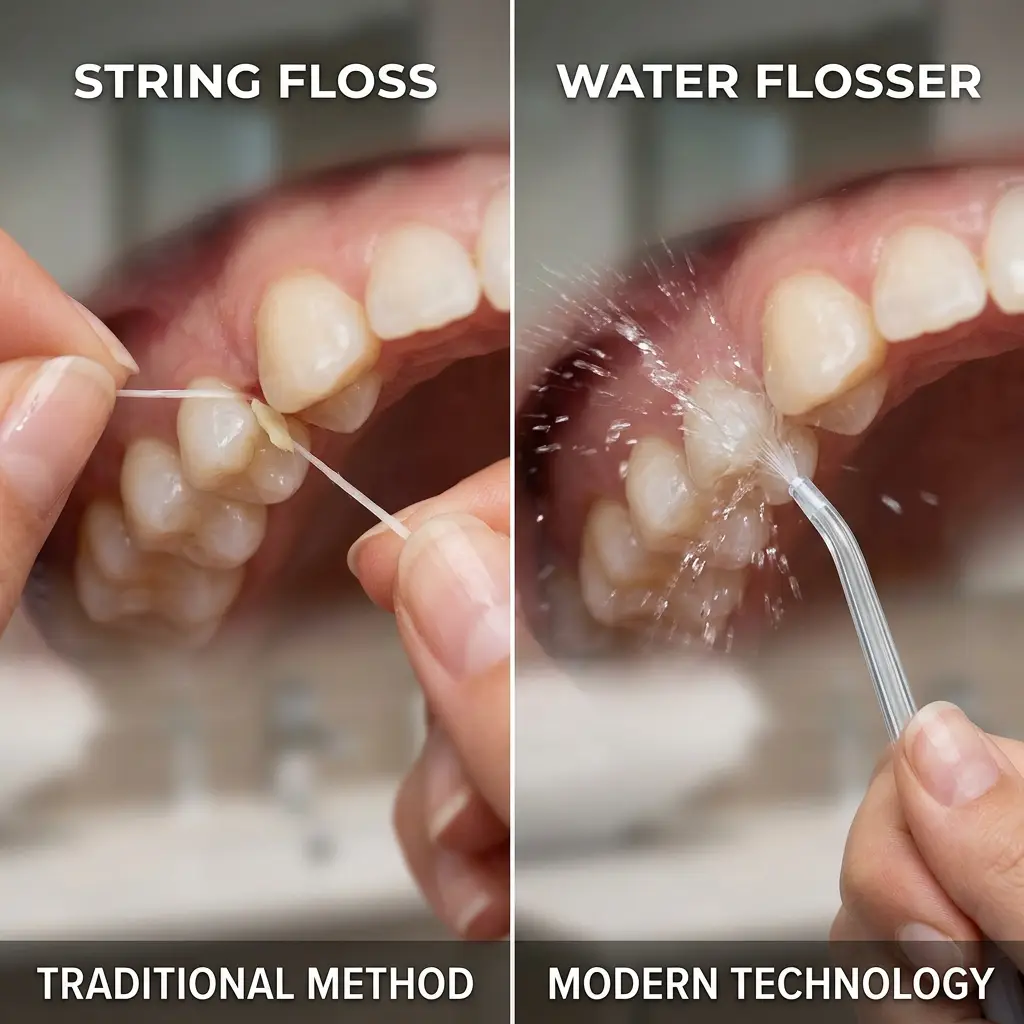
Water Flosser vs String Floss: Which Is Better for Gum Health?
Despite dentists recommending flossing for decades, studies consistently show that fewer than 30% of UK adults floss regularly. The most common reasons: it’s fiddly, it causes bleeding, and it’s easy to skip. Water flossers address all three objections simultaneously.
What Is a Water Flosser?
A water flosser (also called an oral irrigator) uses a pressurised stream of water to clean between teeth and below the gum line — the areas your toothbrush can’t reach. The DE Labs Cordless Oral Irrigator has a 300ml water tank, three pressure modes, and IPX7 waterproof construction, making it genuinely usable in the shower.
Water Flosser vs String Floss: Head to Head
- Plaque removal: string floss has a slight edge on direct contact; water flossers clean a wider area including below the gum line
- Gum health: multiple studies show water flossers reduce gingivitis more effectively than string floss
- Ease of use: water flosser wins — no fiddling with 30cm of string around your fingers
- Bleeding gums: water flossers are gentler on inflamed gum tissue; switching from string often reduces bleeding within 2 weeks
- Braces / implants / bridges: water flossers are far superior — impossible to floss effectively with string around orthodontic hardware
- Cost: string floss is cheaper per use; a water flosser pays for itself in a few months vs. premium floss picks
Who Benefits Most from a Water Flosser?
- People who find string flossing uncomfortable or skip it regularly
- Anyone with braces, implants, bridges, or crowns
- People with gum disease or a history of gingivitis
- Those who have been told by a dentist to improve their interdental cleaning
- Anyone who wants a more thorough clean than brushing alone provides
How to Use the DE Labs Water Flosser
- Fill the 300ml tank with lukewarm water (cold water can cause sensitivity)
- Start on the lowest pressure mode for the first week
- Lean over the sink and place the tip in your mouth before turning on
- Guide the stream along the gum line, pausing briefly between each tooth
- Work through all four quadrants — the 300ml tank holds enough for a complete clean
- Use once daily, ideally before brushing rather than after
Use it before brushing, not after. Flossing first dislodges debris and bacteria; brushing afterwards removes them completely. Most people do it the wrong way round.
The DE Labs Water Flosser
- 3 pressure modes: gentle, medium, and strong
- 300ml water tank — enough for a full clean in one fill
- USB rechargeable — one charge lasts multiple weeks
- IPX7 waterproof — safe for shower use
- Portable and cordless — ideal for travel
Available for £17.99 at thedelabs.com. Pairs perfectly with the DE Labs Sonic Electric Toothbrush for a complete dental care routine.